Maheshwari Silk Hand Block Print Sarees: Where Silk Meets Tradition
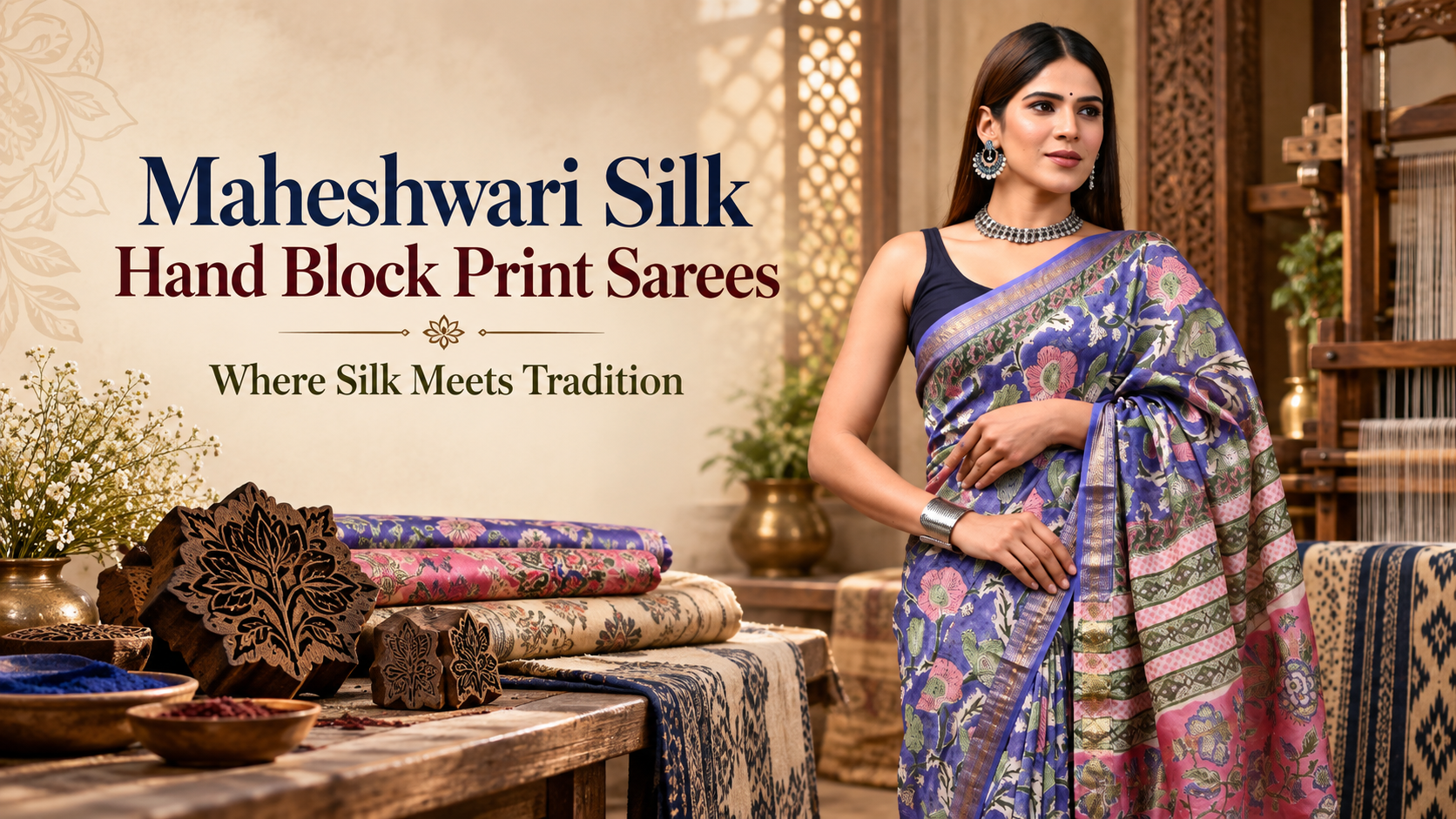
Maheshwari is a silk-cotton blend woven in Maheshwar, a temple town on the banks of the Narmada in Madhya Pradesh, and it's known for its fine texture, subtle sheen, and a reversible border that looks good from either side. Put hand block printing on top of that natural silk lustre, and every motif ends up looking a little richer, a little more luminous, than it would on plain cotton. That combination is exactly why Maheshwari hand block print sarees sit at the premium end of what we wholesale.
A Queen's Fabric, Literally
The story usually starts with Rani Ahilyabai Holkar, the Maratha ruler who made Maheshwar her capital in the 18th century. She's credited with inviting master weavers from Surat and Mandu to settle in the town, and according to local tradition, she designed the very first saree herself. The earliest versions were pure silk and went by a different name entirely, Garbh Reshmi, before the fabric evolved into the lighter silk-cotton blend we know today. Ahilyabai reportedly had the weavers draw motifs straight from the carvings on Maheshwar Fort and its temples, treating the architecture almost like a design catalogue — which is part of why so many Maheshwari borders still carry geometric, architectural patterns rather than purely floral ones.
The Bugdi: What Makes the Border Special
The signature reversible border has an actual name, bugdi, and it's woven so the design reads clearly from both the front and back of the fabric. It's a small technical detail, but it takes real precision on the loom to pull off, and it's one of the fastest ways to tell a genuine Maheshwari piece from an imitation. In 2010, Maheshwari sarees received Geographical Indication status, formally tying the name to handloom weaving done in and around Maheshwar itself.
Why Hand Block Printing on Maheshwari Silk Is a Specialised Skill
Because the weave is fine and tightly packed, printers have to control dye absorption carefully so the colour sits evenly without dulling that natural glow. It takes a lighter hand and a more precisely calibrated dye than plain cotton needs — skilled artisans work slower here, and it shows in the finish.
Maheshwari vs Chanderi vs Kota Doria
| Fabric | Weight | Signature Feature | Best For |
|---|
| Maheshwari | Light-medium | Bugdi reversible border | Weddings, premium gifting |
| Chanderi | Light | Sheer, glossy translucence | Festive wear, gifting |
| Kota Doria | Very light | Open, checkered weave | Summer, daytime festive |
Maheshwari Sarees vs Maheshwari Salwar Suits
If you stock both stitched and unstitched ethnic wear, our unstitched Maheshwari hand block print salwar suit sets use the same fabric quality and print technique as the saree range, so both can be sourced together as one coherent line.
How to Style Maheshwari Silk Block Print Sarees
- Weddings and festive events: The natural sheen pairs well with statement jewellery and a contrast silk blouse.
- Office or festive-formal wear: Smaller, subtler motifs suit semi-formal daytime occasions better than a dense print.
- Gifting: Between the premium feel and the bugdi border, Maheshwari sarees do well in festive gifting collections.
Caring for Maheshwari Silk Fabric
Dry cleaning is the safer choice, especially for pieces with detailed block print work, since it protects both the sheen and the print. If you're hand washing at home instead, stick to cold water, a mild silk-safe detergent, and dry flat in the shade, well away from direct sun.
Browse the full Maheshwari silk hand block printed sarees collection for wholesale, and for care advice that covers every fabric we work with, see our hand block print care guide.
Frequently Asked Questions (FAQ)
Q1: What is special about Maheshwari fabric compared to other silks?
It's a silk-cotton blend with a reversible border, called a bugdi, designed to look attractive from either side. That, plus a fine, subtle sheen, gives it a lighter weight and softer drape than pure silk while still looking festive.
Q2: Who is credited with starting the Maheshwari weaving tradition?
Rani Ahilyabai Holkar, the 18th-century Maratha ruler who made Maheshwar her capital. She's said to have invited master weavers from Surat and Mandu to settle there and reportedly designed the very first saree herself.
Q3: Does Maheshwari fabric have a GI tag like some other Indian handlooms?
Yes, the Maheshwari saree received Geographical Indication protection in 2010, tying the name specifically to the traditional handloom weaving done in and around Maheshwar.
Q4: Is Maheshwari silk suitable for daily wear?
It can be worn for daytime or semi-formal occasions, but hand block printed Maheshwari sarees are generally positioned as a premium, occasion-ready category rather than everyday casual wear, given their finish and price point.
Q5: Does Aarav Collection wholesale Maheshwari silk sarees and suits?
Yes, we manufacture and wholesale hand block printed Maheshwari silk sarees along with unstitched Maheshwari salwar suit sets from our Jaipur facility. Contact us for catalogues, fabric samples, and bulk order pricing.