Various Cotton Sarees for Unmatched Elegance and Charm
Indian sarees come in a genuinely wide range of fabrics, and each one tends to suit a different kind of day: cotton for everyday and office wear, silk for weddings and formal functions, chiffon and georgette for evening wear, Bandhani for casual everyday elegance, and designer or lehenga-style sarees for weddings and celebrations. Aarav Collection specialises in wholesale cotton sarees, alongside cotton salwar suits and hand block printed styles.
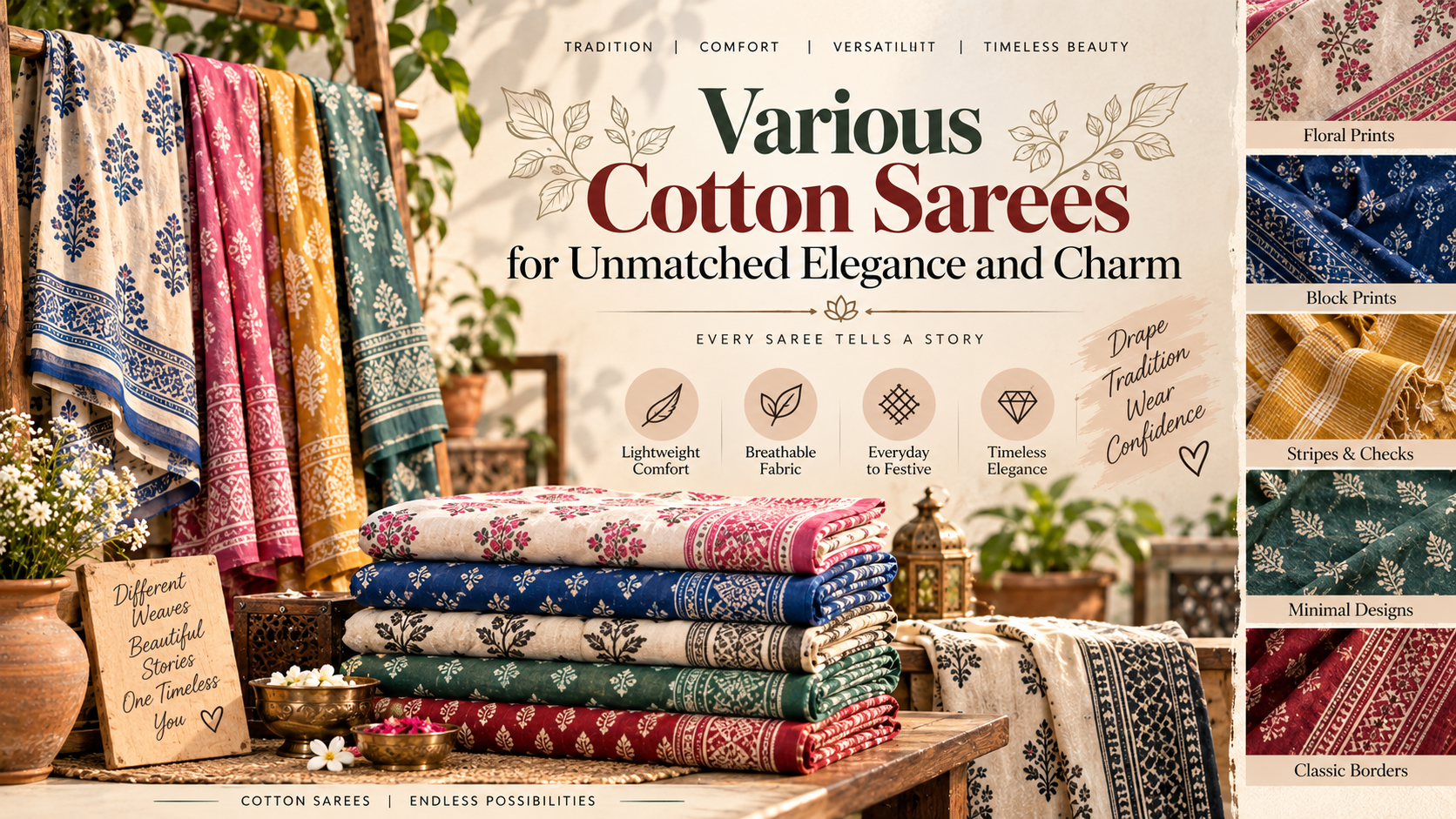
Sarees remain one of the most graceful and versatile garments a woman can wear, and a well-draped cotton saree carries an elegance that's hard to match. Since sarees are the most widely worn attire among Indian women, Aarav Collection offers cotton sarees, salwar suits, hand block printed sarees, and more as a leading wholesale clothing supplier in Rajasthan. Here's a real look at the different saree fabrics worn across India.
Saree Fabric Quick Reference
| Fabric | Feel | Best For |
|---|
| Cotton | Breathable, matte, comfortable | Everyday, office wear |
| Silk | Rich, structured, glossy | Weddings, formal occasions |
| Chiffon | Sheer, glossy, smooth drape | Parties, evening events |
| Georgette | Duller finish, more texture | Structured evening wear |
| Bandhani | Hand-tied dots, natural tones | Casual everyday, festive |
Cotton Sarees
Among all saree fabrics, cotton sarees remain a favourite for the majority of Indian women, particularly across northern, north-eastern, and southern India. Beyond the simple appeal, cotton suits warm weather and lighter frames especially well, and it works comfortably as office wear too — a pastel cotton saree with a contrasting dark border, paired with flats and a jute bag, makes for an easy, polished everyday look.
Silk Sarees
Woven from silkworm-derived yarns, silk sarees carry a natural richness that's made them a symbol of prestige, especially for weddings and auspicious occasions across South India. Banarasi sarees, among the most celebrated silk varieties, remain a traditional choice for weddings in northern India.
Chiffon Sarees
Chiffon is a lightweight, sheer fabric best suited to evening wear, its smooth drape lending an elegant, slimming silhouette that works well for parties and evening functions.
Georgette Sarees
Closely related to chiffon, georgette is traditionally silk-based with a slightly duller finish and springier texture, which makes it better suited to more structured evening outfits. A red georgette saree paired with a deep-neck blouse in green, royal blue, yellow, or silver is a striking choice for a dinner party.
Bandhani Sarees: What's Actually Behind the Dots
Bandhani, called Bandhej in Rajasthan (same craft, just a different regional name), is a tie-dye technique practised by the Khatri community across Gujarat and Rajasthan, with roots tracing back thousands of years to the Indus Valley. Every single dot in the pattern is tied off by hand before the fabric is dyed, and a single densely patterned saree can involve thousands of individual knots, which is exactly why genuine Bandhani takes real time and skill, not just a printer running through a dot pattern. Kutch Bandhani earned a Geographical Indication tag in 2021 to protect the craft from machine-printed imitations. Bandhani sarees suit casual, everyday wear beautifully — pair one with a solid dark or white blouse and a contrast tote bag for an easy, vibrant summer look.
Lehenga Sarees
Lehenga-style sarees are pre-stitched at the waist to mimic a lehenga's structure, making them a popular choice for anyone who finds traditional draping fiddly. They're especially favoured for weddings and celebrations, and look striking in bold shades like neon blue or pink, styled with statement accessories.
Designer Sarees
As fashion trends evolve, so has saree design. Modern designer sarees now come in net, velvet, and glossy fabrics, often finished with sequins and heavier embellishments for occasions that call for extra sparkle.
How to Wrap a Saree Elegantly
Draping a saree well takes a little practice, but once you've got it, this nine-yard garment carries an elegance that few other outfits match, equally at home at a corporate event or a wedding. Draping styles keep evolving too, with more people experimenting with contemporary and regional variations on a tradition that's centuries old.
That's a real look at the saree types worn across India. Aarav Collection specialises in wholesale cotton sarees, and you can view the full collection online to find the right look for this season, or reach out through our contact page with any queries.
Frequently Asked Questions (FAQ)
Q1: Which saree fabric is best for everyday wear?
Cotton is generally the most practical choice for everyday and office wear, thanks to its breathability, comfort, and suitability for warmer climates.
Q2: What's the difference between chiffon and georgette sarees?
Chiffon is lighter and glossier with a very smooth drape, while georgette is traditionally silk-based, slightly duller in finish, and has more texture, making it better suited to structured evening styles.
Q3: Are Bandhani and Bandhej actually different techniques?
No, they're the same craft under two regional names. Bandhani is the term used in Gujarat, and Bandhej is the more common name in Rajasthan, though the tie-and-dye technique itself is identical.
Q4: Why is genuine Bandhani more expensive than printed imitations?
Because every single dot is tied by hand. A densely patterned Bandhani saree can involve thousands of individual hand-tied knots, taking days of skilled work, which is a completely different process from a machine printing dots to imitate the look.
Q5: Does Aarav Collection specialise in a particular type of saree?
Yes, we specialise in wholesale cotton sarees, including hand block printed varieties, alongside cotton salwar suits and kurtis, all manufactured directly from our Jaipur facility.