What Tools are used in Block Printing?
Hand block printing runs on a fairly compact set of tools: hand-carved wooden blocks, one per colour, a padded printing table, a wooden dye tray, pins and brushes to keep the fabric secure and clean, and a handful of carving tools used to prepare the blocks themselves. Simple as that list sounds, it's exactly what lets an artisan repeat the same design across metres of fabric by hand, consistently, print after print.
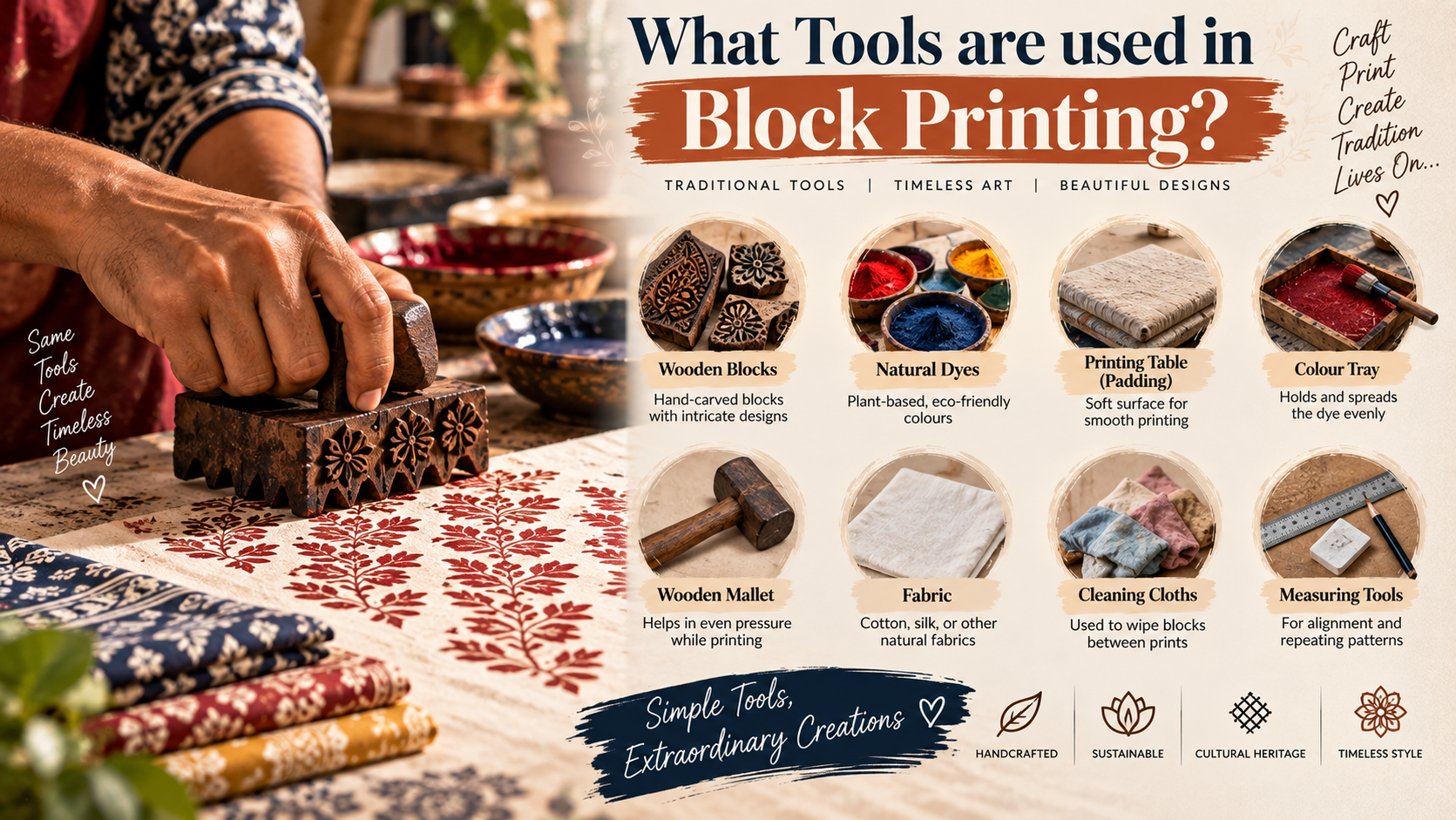
Block printing itself is one of the oldest printmaking techniques around, first developed in China thousands of years ago. In its earliest form, artists carved an image in relief onto a wooden block, inked it, and pressed it firmly onto cloth — including fabrics like unstitched cotton salwar suits — to leave the print. Wooden blocks are still at the centre of the craft today, backed up by a set of supporting tools that have barely changed.
Whether you're a professional hand block print Chanderi salwar suit manufacturer or completely new to the craft, having the right tools makes all the difference. Here's what actually sits behind every hand block printed saree in our collection.
The Wooden Block (or "Thappa")
The wooden block is the single most important tool in the whole process, and many printers simply call it a thappa — the printing process itself is sometimes referred to as "thappa chappai." Artisans carve and prepare these blocks by hand, pressing them firmly onto fabric to create each motif, the exact process behind the traditional Chanderi salwar suit designs from our Chanderi hand block print saree artisans. A wooden tray, usually fitted with a bamboo lattice bed cover, works alongside it, spreading colour evenly before the block picks it up.
Carving the Block: The Bow Drill and the Chisels
Before a block ever touches fabric, a carver has to cut the design into it, and this is where the more specialised tools come in. Larger recessed areas are typically drilled out first using a traditional bow drill setup — a bow called a kamthi paired with a driller called a saarardi — before a set of chisels, often handmade by the carvers themselves in a range of shapes and sizes, takes over for the fine detail. Files and small hammers round out the kit for smoothing edges and correcting minor imperfections. It's slow, exacting work: a single wrong cut can undo hours of carving, since wood can't really be corrected the way other materials can.
Why the Wood and the Oil Matter
Teak, known locally as sagwan, and sheesham (Indian rosewood) are the two woods carvers reach for most. Sagwan is softer and more durable, which suits it to general use, while sheesham's extra hardness holds up better under very intricate motifs. Once carved, blocks are traditionally soaked in mustard oil for several days, a step that protects the wood from warping and insect damage over years of repeated contact with water-based dye.
Printing Table and Pad
The printing table is where the actual work happens. Fabric is pinned flat across it, and the printer works down its length stamp by stamp. The printing pad, sitting in the dye tray, helps spread colour evenly before each stamp goes down.
Pins and Brushes
Easy to overlook since they never touch the design directly, but pins and brushes matter just as much as anything else on this list. Pins hold the fabric taut on the table, and brushes keep the table and blocks clean between colours, both essential for a crisp, clean Chanderi hand block print.
Have you browsed a wholesale hand block print supplier's store before? If so, you've likely seen fabric carrying exactly this kind of detailed hand block work behind it. If you'd like to try it yourself, this is the full kit to gather before you start on a simple design of your own.
Frequently Asked Questions (FAQ)
Q1: What kind of wood is used to make block printing blocks?
Teak, known locally as sagwan, and sheesham (Indian rosewood) are the two most common. Sagwan is favoured for its durability and softer grain, while the relative hardness of sheesham suits finer, more intricate motifs.
Q2: What is a 'thappa' in hand block printing?
Thappa is simply the term many printers use for the carved wooden block itself, and the printing process is sometimes called 'thappa chappai', which translates roughly to block printing.
Q3: How do carvers drill out the design on a wooden block?
Traditionally with a bow drill setup, a bow called a kamthi paired with a driller called a saarardi, used to bore out the larger recessed areas of the design before finer chisels take over for the detail work.
Q4: Why is a wooden tray important in block printing?
The wooden tray, usually fitted with a bamboo lattice bed cover, is used to spread dye evenly before the block is stamped onto fabric, helping ensure consistent colour across the print.
Q5: Does Aarav Collection manufacture its sarees using these traditional hand block printing tools?
Yes, our Chanderi and cotton hand block printed sarees and suits are produced using traditional wooden blocks, trays, and printing tools by artisans working from our Jaipur facility.