Why Jaipur is the Hand Block Printing Capital of India
Jaipur and its surrounding villages, especially Bagru and Sanganer, have been centres of hand block printing for centuries, and there's an actual founding story behind it rather than pure coincidence. Skilled Chhipa printer families, reliable river water for dyeing, and a deliberate royal push to build a trading city are what turned this region into India's largest hub for hand block printed textiles, still supplying sarees, suits, and home decor to buyers across the country and abroad.
How It Actually Started: 1727 and a New Capital
In 1727, Maharaja Sawai Jai Singh II founded Jaipur as a new capital, and he built it to be a commercial hub as much as a political one, actively inviting skilled artisans from across India to settle and set up karkhanas, or workshops. Among them were block printers from Gujarat, many of whom had already fled westward during the mid-17th-century conflicts between the Mughals and the Marathas. As their workshops grew, printers moved production to the outskirts of the new city, settling in the village of Sanganer on the banks of the Amanishah river. That river turned out to matter more than anyone probably expected at the time: its particular water composition gave Sanganer-printed fabric an unusually clear, bright finish that other locations struggled to match, which is a big part of why the craft took root there specifically rather than fading out like it did in some other regions.
Bagru and Sanganer: Two Villages, Two Distinct Styles
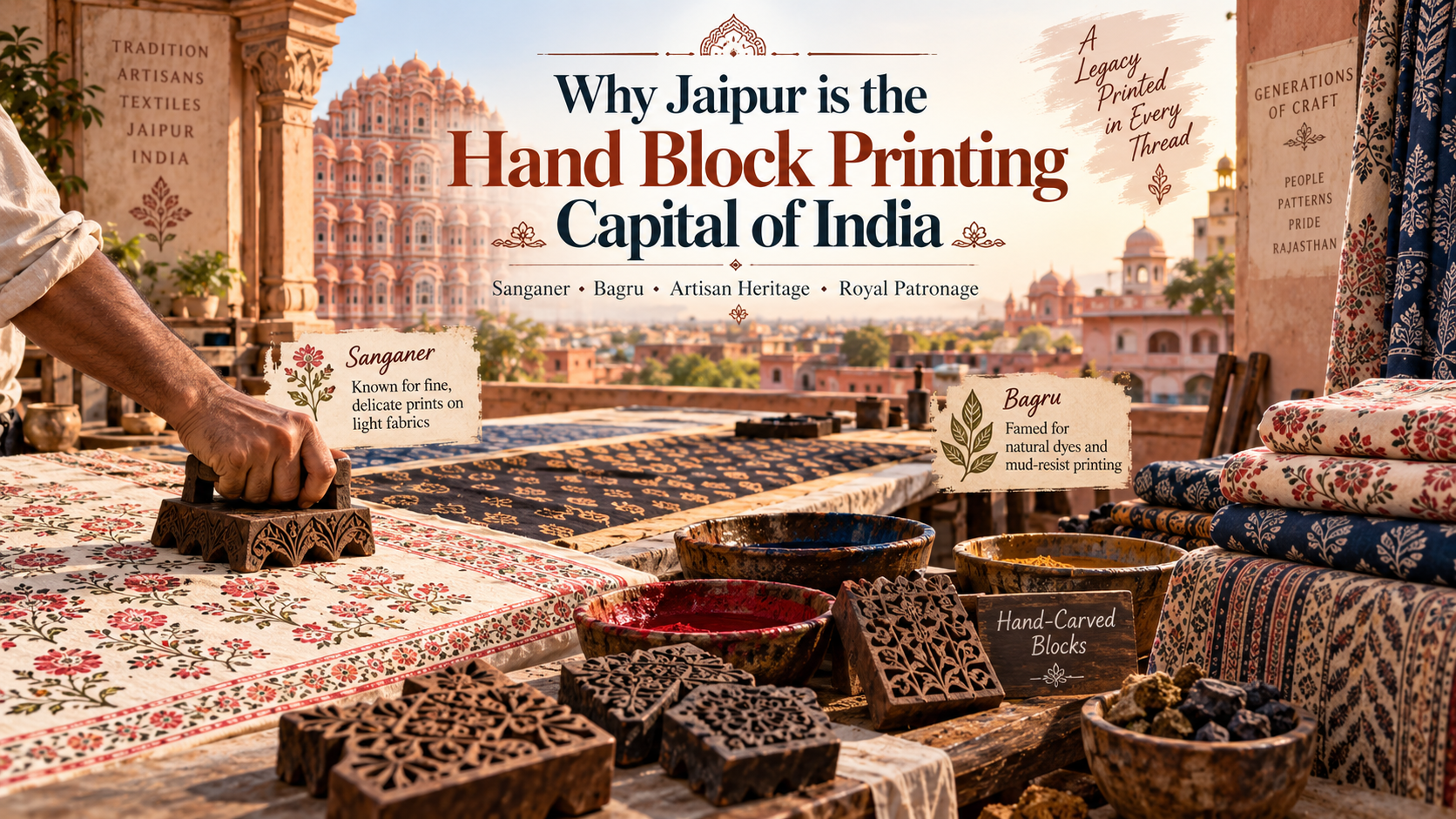
Roughly 30-40 kilometres from Jaipur city, Bagru and Sanganer are considered the true birthplace of the region's block printing tradition, and each developed its own distinct visual language. Bagru is known for earthy natural dyes and the traditional "dabu" mud-resist technique, while Sanganer became known for finer, more detailed floral motifs on lighter backgrounds — a style so recognised in its own right that Sanganeri print received Geographical Indication protection in 2010. Both traditions are still practised by printer families today, many of whom have worked in the craft for generations.
The Chhipa Community: Custodians of the Craft
The word "Chhipa" refers to the traditional printer community of Rajasthan, who trace their own roots back to that same wave of migration from Gujarat, and who have preserved and passed down hand block printing techniques ever since. Their deep knowledge of dye chemistry, wood carving, and fabric handling is what's allowed Jaipur's block print industry to maintain such consistent quality across generations, even as designs keep evolving to match modern fashion trends.
Why Jaipur Became a Wholesale and Export Hub
Beyond the craft itself, Jaipur's position as a major textile trading centre in North India meant raw fabric, dyes, and finished hand block printed goods could move efficiently to markets across the country, and international exporters were buying from the region as far back as the colonial era. Over time, this made Jaipur not just a production centre but also a wholesale and export hub, with manufacturers supplying everything from hand block printed sarees to men's hand block printed shirts to buyers, boutiques, and exporters worldwide.
Aarav Collection's Roots in Jaipur
As a Jaipur-based manufacturer, Aarav Collection is built directly on this generations-old block printing ecosystem. We work with skilled local artisans and printer families to produce our saree, suit, and home decor collections, keeping the traditional hand-carving and hand-stamping process at the centre of everything we make. You can read more about our story and manufacturing process on our About Us page.
What This Means for Buyers
Sourcing hand block printed textiles from a genuine Jaipur-based manufacturer, rather than a reseller several steps removed from the actual workshop, typically means better quality control, more authentic craftsmanship, and more competitive wholesale pricing since there are fewer middlemen involved in the supply chain.
Frequently Asked Questions (FAQ)
Q1: What is the difference between Bagru and Sanganeri block printing?
Bagru printing is traditionally known for earthy, natural dye colours and mud-resist (dabu) techniques, while Sanganeri printing is known for finer, more detailed floral motifs, often on lighter background fabric.
Q2: Who are the Chhipa community?
The Chhipa are the traditional hand block printer community of Rajasthan, historically responsible for carving blocks, mixing dyes, and hand-stamping fabric, and their descendants continue to practise the craft in Jaipur and surrounding villages today.
Q3: When and why did printers actually settle in Sanganer?
Sawai Jai Singh II founded Jaipur in 1727 and actively invited skilled artisans, including printers from Gujarat, to settle there. Many had already fled Gujarat during Mughal-Maratha conflicts in the mid-17th century, and they moved to Sanganer specifically because the local river water gave the dyes an unusually clear, bright finish.
Q4: Does Sanganeri print have any official heritage protection?
Yes, Sanganeri print received a Geographical Indication tag in 2010, formally protecting the name and tying it to the traditional craft practised in and around Sanganer.
Q5: Is Aarav Collection based in Jaipur?
Yes, Aarav Collection is a Jaipur-based manufacturer and wholesaler of hand block printed sarees, salwar suits, and home decor products, working directly with local artisans to produce our collections.