A Complete Guide to Chanderi Hand Block Printed Sarees
Quick answer: Chanderi is a lightweight, sheer fabric woven with a mix of silk and cotton (or silk-cotton blends) that originates from Chanderi town in Madhya Pradesh. Its fine, glossy texture and translucent weave make it an ideal base for hand block printing, since the natural sheen makes every colour and motif appear more luminous. Chanderi hand block printed sarees are popular for their light weight, breathability, and festive-yet-comfortable drape, and are manufactured and wholesaled at factory-direct pricing by Aarav Collection in Jaipur.
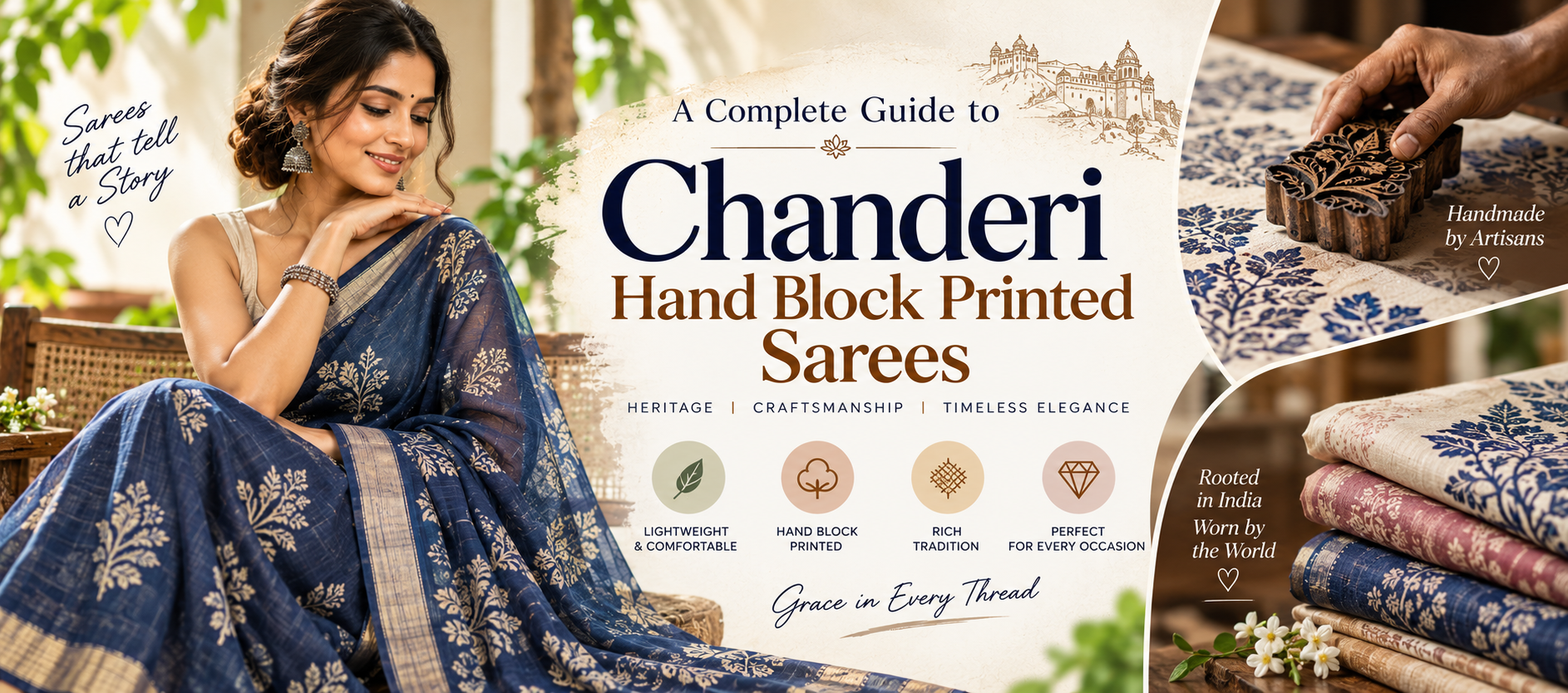
What Makes Chanderi Fabric Unique?
Chanderi weaving dates back several centuries and is traditionally done using fine, thin threads that give the finished cloth a characteristic "sheer" or semi-transparent quality along with a soft sheen. Unlike thicker cottons, Chanderi drapes close to the body, which is why it has long been favoured for both everyday and special-occasion sarees. When paired with hand block printing, the fabric's natural glow makes even simple motifs stand out beautifully.
How Chanderi Sarees Are Hand Block Printed
The printing process for Chanderi follows the same broad principles as other hand block prints: hand-carved wooden blocks are dipped in dye or a resist paste and stamped repeatedly across the length of the fabric. However, because Chanderi is so fine and lightweight, printers must use a lighter, more controlled hand to avoid over-saturating or damaging the delicate weave. This is a skill that takes years to master, which is part of why authentic Chanderi block print work is considered a premium category. For a closer look at the tools and materials behind this process, see our guide to block printing supplies.
Chanderi vs Kota Doria vs Maheshwari: How They Compare
Chanderi is one of three premium lightweight hand block print fabrics we manufacture, alongside Kota Doria and Maheshwari silk. Here's how they compare at a glance:
| Fabric | Composition | Feel | Best For |
|---|
| Chanderi | Silk-cotton blend | Light, sheer, subtle sheen | Festive wear, gifting |
| Kota Doria | Cotton-silk, open weave | Very sheer, airy, checkered | Summer, daytime festive |
| Maheshwari | Silk-cotton, reversible border | Fine, glossy, structured | Weddings, premium gifting |
If you're sourcing across all three for a boutique or wholesale catalogue, this comparison is a useful starting point before requesting samples.
Chanderi Sarees vs Chanderi Salwar Suits
Beyond sarees, Chanderi hand block printing is equally popular on unstitched suit sets. If you are sourcing for a store that also carries ready-to-stitch or unstitched ethnic wear, our Chanderi hand block printed salwar suits collection uses the same fabric quality and printing technique as our sarees, giving you a matched product line to offer customers.
How to Style a Chanderi Hand Block Printed Saree
- Festive wear: Pair with a contrast silk blouse and statement jewellery for weddings and festive occasions.
- Office or day wear: Choose subtler, smaller block print motifs with a plain blouse for a polished, understated look.
- Layering: Because Chanderi is so lightweight, it layers well under a jacket-style blouse or with a contrast dupatta for cooler months.
Caring for Chanderi Block Print Sarees
Chanderi is delicate compared to pure cotton, so it is best dry-cleaned or hand-washed gently in cold water, dried flat in the shade, and stored folded in a breathable cotton bag rather than plastic to preserve the sheen and prevent the block print from cracking over time. For a full breakdown of do's and don'ts across fabrics, see our hand block print care guide.
Explore our full Chanderi hand block printed sarees collection for wholesale, compare it against machine-made alternatives in our guide to spotting authentic hand block print, and see our guide to the block printing process if you would like to understand the craft behind every piece in more depth. For wholesale pricing and current designs, reach out through our contact page.
Frequently Asked Questions (FAQ)
Q1: Is Chanderi fabric suitable for summer?
Yes. Chanderi is lightweight and breathable, which makes it a comfortable choice even in warmer months, although it is equally popular for festive wear year-round because of its natural sheen.
Q2: What is the difference between Chanderi silk and Chanderi cotton?
Chanderi silk uses a higher proportion of silk yarn for a glossier finish and a slightly heavier drape, while Chanderi cotton (or silk-cotton blends) is lighter, more breathable, and generally more affordable, making it popular for daily and semi-formal wear.
Q3: How does Chanderi's manufacturer price compare to plain cotton or Kota Doria sarees?
Chanderi typically sits above plain cotton and Kota Doria in manufacturer pricing, since its silk-blend yarn and finer weaving process cost more to produce than a standard cotton weave. It's generally positioned alongside Maheshwari silk as a premium hand block print category. Contact us for the current wholesale price list.
Q4: Can I order a Chanderi salwar suit in the same print as a Chanderi saree?
In many cases, yes. Since our Chanderi sarees and salwar suits are produced using the same fabric quality and printing workshops, matching or closely coordinated prints across both categories can often be arranged. Contact us to check current design availability.
Q5: Does Aarav Collection offer Chanderi sarees for bulk or wholesale purchase?
Yes, we manufacture and wholesale hand block printed Chanderi sarees as well as matching Chanderi salwar suits directly from our Jaipur unit. Contact us for current designs, fabric options, and wholesale pricing.