Kota Doria Hand Block Print Sarees: The Lightest Fabric for Summer
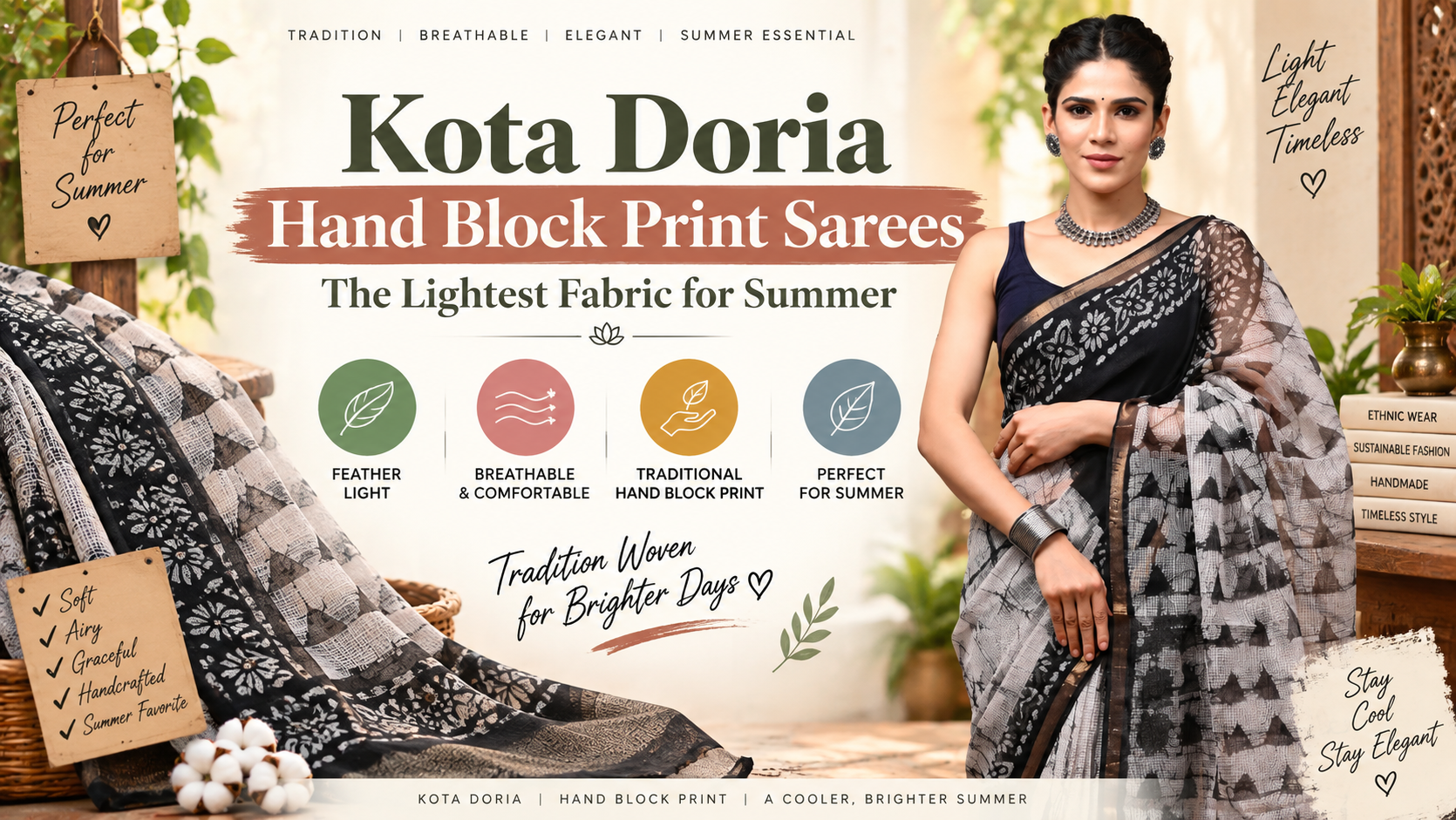
Kota Doria is a sheer, checkered-weave fabric that's been handwoven in and around Kaithoon, a small town near Kota in Rajasthan, for roughly 250 years. It's spun from a mix of cotton and silk, and the open, airy weave is exactly why it's stayed a favourite for hot weather, daytime festive events, and everyday summer wear ever since. When hand block printing is added on top, you get something that looks delicate but is genuinely built for the heat.
Where Kota Doria Actually Comes From
The story goes back to the mid-17th century, when a ruler of Kota is said to have brought weavers from Mysore, in present-day Karnataka, to settle in Kaithoon. Those weavers already knew how to make a particular lightweight, small-checked cotton fabric, and over the generations that technique blended with local silk weaving to become what we now call Kota Doria. Kaithoon is still the heart of it today — walk through the town early in the morning and you'll hear the clatter of pit looms from homes that have been weaving this fabric for generations, often the same families doing it now as decades ago.
What Actually Makes the Weave So Light
The defining feature is the "khat" — small open squares formed by the way the yarns are grouped, which is where the fabric gets its graph-paper-like look. Traditionally, the weave alternates cotton and silk threads: the cotton is packed tightly and does most of the structural work, while the silk sits in more loosely and adds the sheen without adding much weight. That combination is what gives Kota Doria its particular feel — light enough to see through, but with enough structure to hold its shape when draped.
The GI Tag, and Why It Matters
In 2005, Kota Doria became one of the first products from Rajasthan to receive a Geographical Indication tag, a legal mark that ties the traditional handwoven khat weave specifically to the Kota and Kaithoon region. It exists because genuine handloom Kota Doria has been widely imitated by power-loom copies, often woven in synthetic thread elsewhere in India and sold under the same name at a fraction of the price. The real thing shows small, human irregularities in the khat pattern from the weaver adjusting tension by hand; the copies tend to look a little too perfect, and feel heavier than they should. It's the same authenticity question we cover in our guide to spotting genuine hand block print, just applied to the base weave rather than the printed motif.
Why Hand Block Printing Works So Well on Kota Doria
Because the fabric is already sheer and lightweight, block printed motifs on Kota Doria tend to look like they're floating rather than sitting heavily on the cloth. Printers usually go with smaller, finer motifs here to match that open weave, which is why Kota Doria hand block prints tend to feel elegant rather than busy — a good fit for daytime weddings, summer festivals, or an office that leans a little more festive.
Kota Doria Sarees vs Kota Doria Salwar Suits
If you're also looking for unstitched fabric, our unstitched Kota Doria hand block print salwar suit sets use the same lightweight base and printing technique as our sarees, so retailers can offer both from a single, consistent product line.
Styling Kota Doria by Occasion
| Occasion | Styling Tip |
|---|
| Daytime events | Lightweight blouse, minimal jewellery, let the weave show |
| Layering | Contrast underskirt in a solid colour beneath the sheer fabric |
| Festive daytime functions | A denser floral or geometric print with a statement blouse |
Caring for Kota Doria Fabric
Treat it gently. Hand wash in cold water, squeeze rather than wring, dry flat in the shade, and store it folded in a breathable cloth bag. Because the weave is so open and fine, it can snag on rough surfaces or jewellery more easily than a denser cotton would, so keep it away from anything sharp in storage.
Explore the full Kota Doria hand block printed sarees collection for wholesale enquiries, and if you'd like to compare printing techniques across fabrics more broadly, our post on screen print vs hand block print covers that in depth.
Frequently Asked Questions (FAQ)
Q1: Is Kota Doria fabric transparent?
It's sheer, yes. Hold it up to the light and you'll see the small open squares of the khat weave clearly, which is exactly why it's almost always worn with a matching underskirt or petticoat.
Q2: What does the GI tag on Kota Doria actually mean?
Kota Doria was one of the first products from Rajasthan to receive a Geographical Indication tag, back in 2005. It's a legal recognition that the traditional handwoven khat weave belongs to the Kota and Kaithoon region, and it exists mainly to help buyers tell genuine handloom work apart from power-loom copies sold under the same name.
Q3: Why is Kota Doria traditionally woven from both cotton and silk?
The two yarns do different jobs. Cotton threads are packed tightly to give the weave its structure and take on most of the wear and tear, while the silk threads sit lighter and add the fabric's natural sheen without adding much weight.
Q4: Is Kota Doria good for humid or very hot climates?
Very much so. That open, airy weave is what makes Kota Doria feel cool against the skin even on a sticky afternoon, which is a big part of why it's stayed popular for summer wear for centuries.
Q5: Does Aarav Collection supply Kota Doria sarees and suits for wholesale?
Yes, we manufacture and wholesale hand block printed Kota Doria sarees as well as unstitched Kota Doria salwar suit sets directly from Jaipur. Get in touch through our contact page for current catalogues and pricing.